West Chester University's faculty union president said a strike is possible if Pennsylvania does not increase funding for state universities.
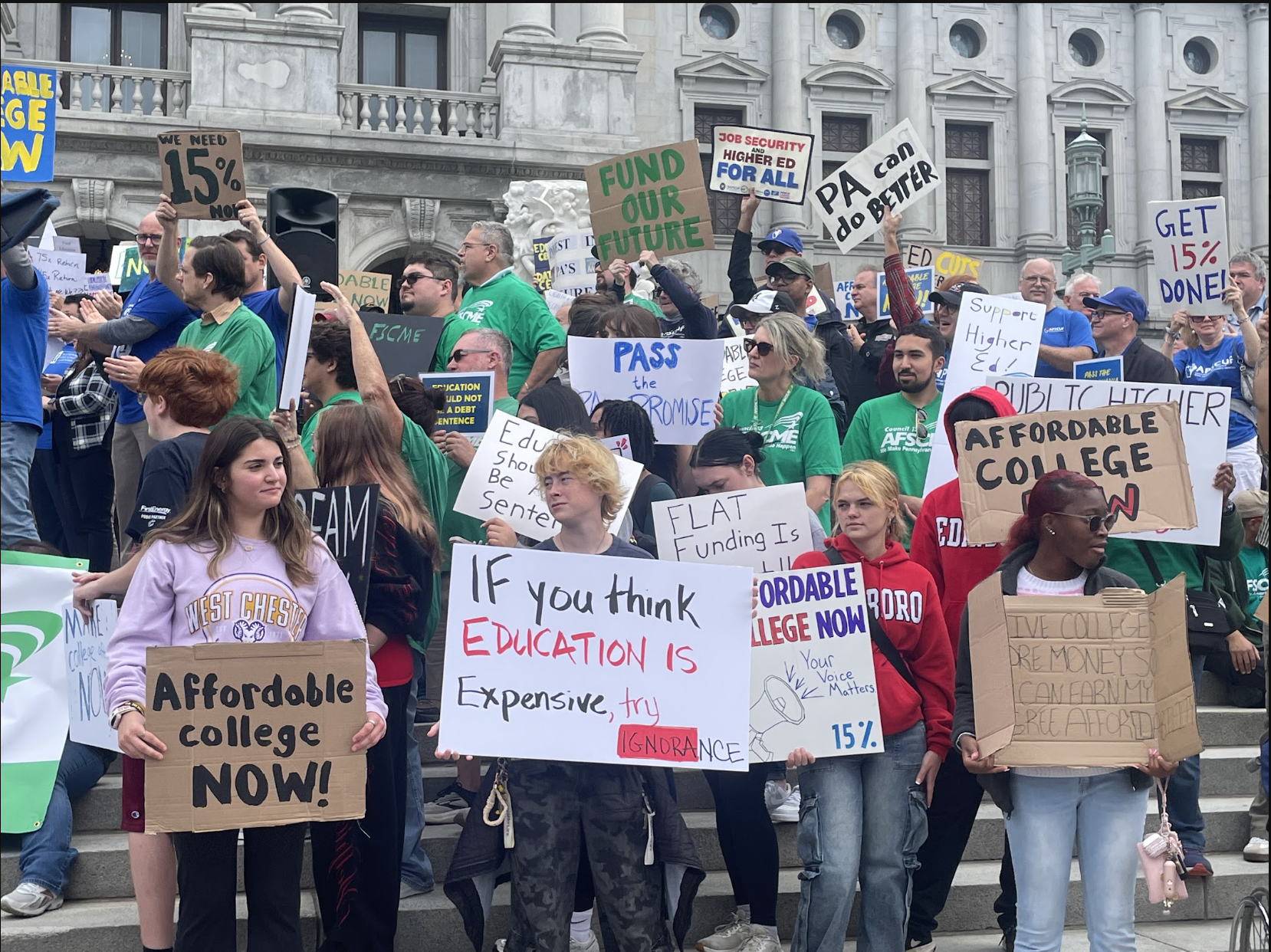
Chris Stangl, president of WCU's chapter of the Association of Pennsylvania State College and University Faculties (APSCUF) and chair of the political science department, made the remarks Sept. 28 at the "Affordable College Now!" rally in Harrisburg. Faculty, staff and students from all 14 APSCUF chapters across the Pennsylvania State System of Higher Education (PASSHE) gathered at the Capitol Complex to demand a 15% increase in state funding, the WCU Quad reported.
"The future of APSCUF's contract has a lot to do with state funding… These are all related issues, so our solidarity with our students is irrefutable," Stangl said at the rally.
APSCUF's last strike shut down classes across the state system for three days in October 2016. The current collective bargaining agreement between APSCUF and PASSHE expires June 30, 2027, and the contract bars strikes for its duration. That means the next round of contract talks, where a walkout could become a real possibility, is less than a year away.
The funding fight centers on a $172-per-semester tuition increase PASSHE's Board of Governors approved for the 2026-27 school year, bringing in-state undergraduate tuition to $4,169 per semester. The board committed to rolling back the hike if the state provides enough funding in the current budget. Without the 15% increase, a further 4.3% tuition rise could follow, according to the Quad.
Stangl said the squeeze hits WCU students especially hard given West Chester's housing costs, noting that some students already work 20 to 30 hours a week while carrying a full course load.
Three WCU freshmen who rode the APSCUF-organized bus to Harrisburg put faces on those numbers. Natalie Trzaskawka, Adrienne Thomas and Anna Yowler, all education majors, met with Marc Collazo, chief of staff to state Sen. Joe Picozzi, after the rally to press the case for more funding. Picozzi has not publicly endorsed the 15% increase or the PA Promise scholarship bill.
Thomas, who comes from a single-parent household, raised concerns about how rising debt burdens will affect first-generation students. Yowler described the pressure of balancing housing costs and tuition planning as a first-year student.
Rally speakers also endorsed PA Promise, introduced as Senate Bill 299 by state Sen. Vince Hughes. The bill would provide last-dollar tuition assistance through the Pennsylvania Higher Education Assistance Agency (PHEAA) for full-time students at state-owned or state-related schools with household incomes under $250,000. Students from families earning $60,000 or less would also receive help with room and board, according to the co-sponsorship memo.
Pennsylvania college students pay about 63% of their education costs on average, well above the national average of 39%, according to the Altoona Mirror. PASSHE enrolls roughly 83,000 students, nearly 90% of them Pennsylvania residents.
SB 299 has been referred to the Senate Education Committee but has not been scheduled for a vote.