Hannah Diem stood in her own school's auditorium Wednesday and told a panel of state lawmakers that AI chatbots had already done lasting damage to how her classmates learn.
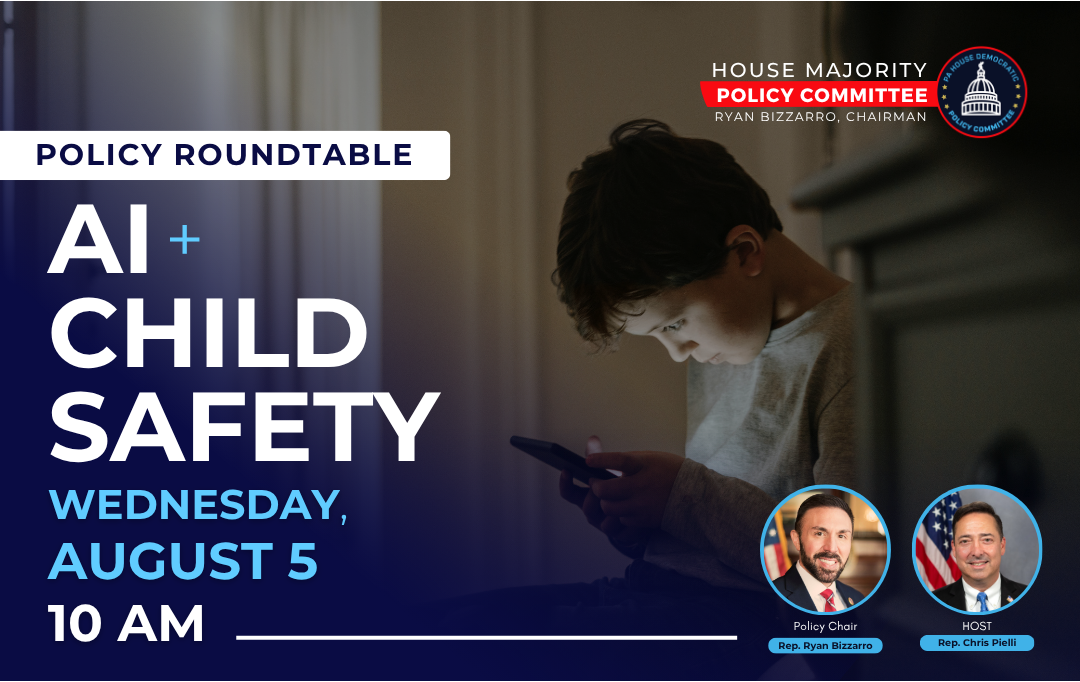
"AI was a cancer that took hold in education; treatment was not given soon enough and it spread to irreversible bounds," the incoming West Chester East High School senior testified at an Aug. 5 roundtable hosted by the Pennsylvania House Majority Policy Committee.
The hearing brought legislators directly into the West Chester Area School District. Superintendent David Christopher, a WCASD pupil services administrator, Children's Hospital of Philadelphia's Jess Boyle and Chester County District Attorney Chris de Barrena-Sarobe all testified alongside Diem, according to a release from the office of state Rep. Chris Pielli (D-Chester), who co-hosted the event. Pielli has sponsored several AI-regulation bills now moving through Harrisburg.
Survey: nearly half of teen chatbot users report harm
Boyle, CHOP's senior director of digital care transformation and digital health, presented survey data from a nationally representative study of nearly 3,500 American teenagers. More than six in 10 reported using a conversational AI chatbot, with one in nine logging on daily. Nearly half of those users reported at least one harmful experience: roughly one in three were asked for uncomfortable personal information, nearly one in four felt manipulated, one in seven received self-harm content and one in eight received messages related to suicide. The youngest teens surveyed, 13-year-olds, reported the highest rates of harm in nearly every category.
Six in 10 teens cited friendship and companionship as their reason for using chatbots. Boyle told lawmakers the apps are "engineered to supply precisely that," citing the American Academy of Pediatrics' warning that companion chatbots use engagement-prolonging design to meet a child's emotional needs while posing an unregulated risk to their well-being.
Superintendent: existing policies written before deepfakes
Christopher's written testimony identified four areas of concern: equitable access to AI tools, student data privacy, AI-generated deepfakes and synthetic media, and the long-term impact on student well-being and human relationships. He warned that students enter essays and personal reflections into AI platforms without understanding how that data is stored or shared, and that existing school policies were written before deepfake technology became widely accessible.
Christopher called on policymakers to establish "clear guardrails that protect students while preserving the flexibility of local educators to innovate and meet the needs of their communities."
Student: district training came too late
Diem told the panel that students first encountered AI chatbots in middle school through Snapchat's MyAI feature, which pinned itself to the top of the app's feed and looked identical to a real user profile. She said WCASD released an online asynchronous AI training midway through her sophomore year but called it "stale and underresearched," noting students had already been using AI for two years by then. After that training, she said, "AI was not addressed by the district again" for the rest of that year or throughout her junior year.
Legislation ahead
Pielli's House Bill 95, which would require disclosure of AI-generated synthetic content in advertising, passed the House 124-78 on June 17 and was referred to the Senate Communications and Technology Committee on June 22. Other bills advancing include HB 2006, led by Rep. Melissa Shusterman (D-Chester and Montgomery), focused on safeguards against self-harm content in companion chatbots.
The push is not new. At a separate roundtable at the West Chester Community Center on March 20, Gov. Josh Shapiro and Attorney General Dave Sunday joined Pielli and local educators to discuss AI deepfakes. "Once we find out that age verification shows you're a minor, there is no AI companion. That's it. They just can't get it," Pielli said at that March 20 event.
The legislature reconvenes in September after its summer recess, with adjournment expected in late November.